Between Nature and Ourselves
On Chinese Philosophy, Nature, and Scent
In traditional Chinese thought,
nature is not simply the environment in which we live.
It is deeply connected to our bodies, senses, and ways of living.
The concept of Tian Ren He Yi (天人合一),
often understood as the unity of humanity and nature, reflects this relationship.
The changing seasons, the growth and decay of plants,
and shifts in temperature and humidity shape not only the world around us,
but also our daily rhythms and sensory experiences.
For SSLK, this understanding is more than a philosophical idea.
It informs the way we observe nature, work with materials, and create incense.

Nature and Perception
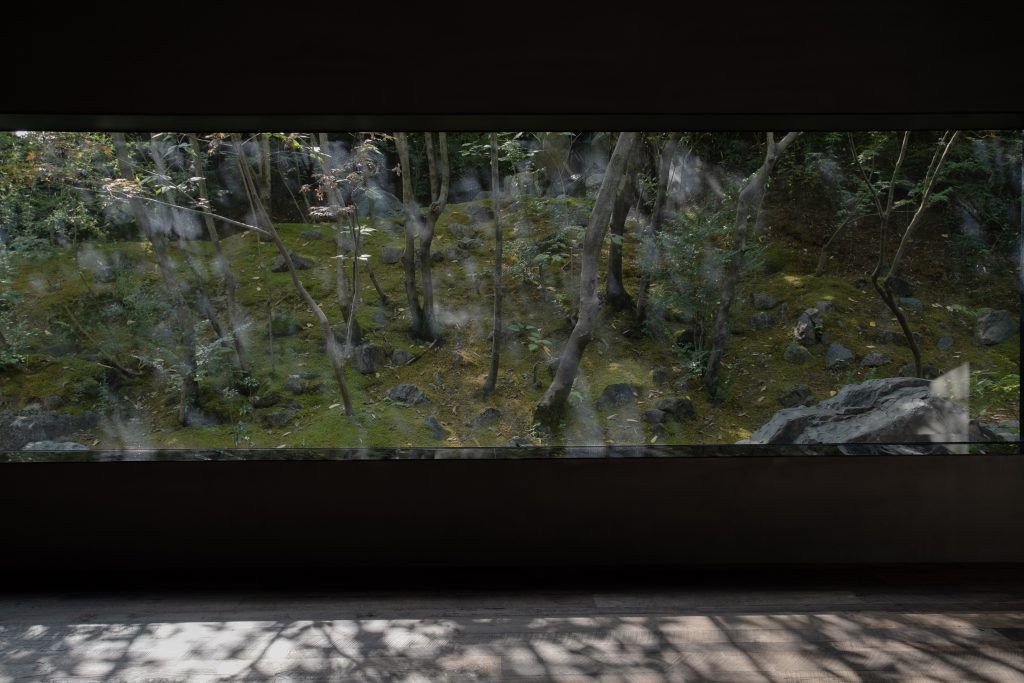
SSLK began with a close observation of the natural world.
From childhood memories of freshly cut cypress wood
to later experiences of photographing changing light, plants, and weather,
our attention has often been drawn to the subtle and fleeting details of nature.
Photography preserves the visual character of a moment.
Scent offers another way of approaching the same experience.
Working with natural aromatic woods, resins, and botanicals,
we attempt to translate certain impressions of the natural world into fragrance.
Rather than recreating a forest or a rainy afternoon literally,
we seek to capture something of the atmosphere and sensory memory they leave behind.
Through these small acts of observation,
our relationship with nature continues to take shape.
Daoism and the Nature of Materials
Daoist philosophy offers another perspective through its ideas of naturalness
and wu wei — often interpreted as acting without unnecessary force.
To work with nature does not mean avoiding intervention altogether.
It means first understanding the character of something
before deciding how to engage with it.
Natural incense materials make this particularly apparent.
Even agarwood from the same region can vary considerably depending on its age,
resin formation, and storage conditions.
Sandalwood, resins, and botanical ingredients also differ from batch to batch.
When creating blended incense, we continually observe these variations,
adjusting proportions and combinations to find a balance between the materials.
Blending is an intentional act of creation,
but it need not erase the individual character of each ingredient.
What interests us is finding a thoughtful relationship
between human judgement and the nature of the materials themselves.
Zen Buddhism and Awareness of the Present
While Daoist thought offers a way of understanding our relationship with nature,
Chan Buddhism, widely known as Zen,
has influenced how we think about attention
and the experience of the present moment.
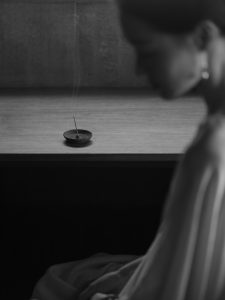
From the moment an incense stick is lit until it burns away,
its scent is constantly changing. Woody, herbal,
and resinous notes emerge at different stages,
gradually unfolding before disappearing into the surrounding air.
Experiencing incense does not require an elaborate ritual.
Simply paying attention to a scent can make us more aware of the movement of air,
the sensations of the body, and small details that often go unnoticed.
These ideas are also reflected in SSLK’s Introspection series.
Based on historical Chinese incense formulas and reinterpreted
through a contemporary approach to scent, Connect, Observe,
and Awaken suggest a gradual inward movement —
entering, becoming still, and perceiving again.
We do not intend incense to prescribe a particular spiritual practice. Rather,
we hope it can offer a little more room for individual perception.
Traditional Chinese blended incense is more than a method of creating fragrance.
It also reflects a long history of observing natural materials,
understanding time, and finding meaning in everyday life.
The unity of humanity and nature, Daoism, and Zen are distinct philosophical traditions,
yet each offers a different perspective on
our relationship with the natural world and ourselves.
For SSLK, continuing a tradition does not mean reproducing its past forms.
We learn from historical formulas and natural aromatic materials
while exploring how they can be understood and experienced today.
Scent becomes a way of observing nature,
and through it, a way of returning to ourselves.